Natural Dog Shampoo:
Why you should know the truth!
Every dog owner wants their companion to feel fresh, clean, and comfortable after a bath. The routine appears straightforward: wet the fur, apply shampoo, massage, and rinse.
However, many pet parents overlook the ingredient list on standard dog shampoos commonly found in supermarkets or pet stores. Mostly, they’re not Natural Dog Shampoo! These products often include components that can harm a dog’s sensitive skin over time and are dressed up in attractive labels and a play on words.
Since dogs frequently groom themselves by licking their coats, and their skin absorbs substances more readily than human skin—while maintaining a distinct natural pH and oil balance—the wrong formula can lead to dryness, irritation, persistent itching, or even recurring skin issues.
This overview examines the typical problematic ingredients in many conventional non Natural Dog Shampoo, explains the drawbacks of chemical based concoctions, and highlights what truly beneficial alternatives should offer.
It aims to empower better purchasing choices and demonstrate why Optima Canine Products‘ Natural Dog Shampoo and Natural Puppy Shampoo, provide a superior, dog-focused option.
Skin PH Range – Non Natural Dog Shampoo damages the balance.
Canine skin typically maintains a pH range of 6.5 to 7.5 (neutral to mildly alkaline), unlike human skin’s more acidic 4.5 to 5.5 level.
Many mass-market shampoos rely on human-inspired bases or generic formulas that disrupt this delicate equilibrium. When the skin’s protective barrier weakens, it loses moisture easily, becomes vulnerable to external irritants, and may trigger excessive scratching, hot spots, or infections.
There’ have been many pushes by companies in the human grooming sectors, that have eliminated chemical mixes from their shampoos and skin cleaning products, so with so much emphasis on clean living, we should also be looking after our pets in the same way. Whether it’s clean eating, avoiding ultra processed products, we owe it to our canine family that they are given the same care… At least that’s what we believe. Natural Dog Shampoo is a winner.
Additionally, dogs have thinner skin in certain areas and engage in constant self-grooming, meaning residual shampoo can be ingested.
Harsh synthetic elements accumulate with repeated use.
Puppies face heightened vulnerability due to even thinner skin and underdeveloped natural oil production, making gentle care especially critical.
Common Problematic Ingredients in Everyday non Natural Dog Shampoo
These ingredients appear frequently in budget or mainstream products. Spotting them requires simply checking the label—no advanced science knowledge needed.
- Sulfates (e.g., Sodium Lauryl Sulfate, Sodium Laureth Sulfate, Ammonium Laureth Sulfate): Inexpensive foaming agents that create impressive lather but aggressively remove natural oils, resulting in dry, tight, flaky skin and coat. They may introduce contaminants like 1,4-dioxane (associated with potential health concerns). This often creates a cycle: more scratching leads to more frequent baths, worsening the dryness. Natural Dog Shampoo should avoid these.
- Parabens (e.g., methylparaben, propylparaben): We can hardly pronounce them let alone rub them on our dogs fur and skin. Preservatives that prevent microbial growth but can accumulate in the body and disrupt endocrine function—not ideal for skin that gets licked. You wonlt find this in reputable Natural Dog Shampoo.
- Synthetic fragrances and dyes: “Fragrance” or “parfum” listings may conceal numerous undisclosed chemicals, including phthalates (known hormone disruptors). Petroleum-derived colors can provoke immediate allergic reactions like redness or itching, with unclear cumulative effects from ongoing exposure.
- Formaldehyde-releasing preservatives (e.g., DMDM hydantoin, quaternium-15, imidazolidinyl urea): These slowly release formaldehyde to maintain shelf life. Formaldehyde irritates skin and is classified as a potential carcinogen; even trace amounts can distress sensitive dogs.
- Mineral oil and petroleum derivatives: These coat the skin like a barrier, clogging pores, impeding natural respiration, and trapping debris. Initial smoothness gives way to greasy or lifeless fur.
- Propylene glycol, isopropyl alcohol (e.g., SD-40 alcohol), and PEG compounds: Added for texture, moisture retention, or enhanced feel, yet they can dehydrate skin, facilitate deeper penetration of other substances, and carry contamination risks in some forms.
- Ethanolamines (e.g., DEA, TEA, cocamide-DEA): Used for foaming or pH adjustment; under certain conditions, they may form nitrosamines (compounds linked to cancer risks).
- Isothiazolinones (e.g., methylisothiazolinone): Potent preservatives notorious for inducing contact allergies and long-term skin sensitization—once a reaction develops, it can persist.
Many affordable shampoos bulk up with water plus synthetic thickeners, salts (like sodium chloride), or low-grade humectants to appear substantial and luxurious. Terms like “coconut-derived” can mislead if processing turns them into irritating sulfates or similar compounds, negating any supposed natural advantages. This can be confusing for consumers, especially when you read the labels, expecting a Natural Dog Shampoo.
We all know how well Marketing and advertising can make events most processed of products look healthy.
The consequence? Temporary cleanliness followed by rebound issues: increased dander, dull coat, scratching, or veterinary visits for secondary infections. Puppies experience amplified effects during their critical growth phase.
3. Know the Characteristics of a High-Quality Dog Shampoo
An effective product should:
- Cleanse thoroughly without depleting natural oils.
- Align with the dog’s natural pH.
- Soothe and support the skin barrier rather than inflame it.
- Feature mild, naturally derived surfactants, plant-based hydrators that absorb properly, and minimal synthetic additives.
- Avoid artificial colors, hidden “fragrance” blends, and pore-clogging petroleum elements.
Why Optima Canine Products’ Natural Dog Shampoo Excels!
Imagery and content in Collaboration with Optima Canine Products & Blanc Creative
Claire has worked within the dog sector for many years, breeding show dogs, working with dogs and formulating and trialing the best supplements and natural remedies.
Products that actually work for so many customers.
Optima Canine Products designs its Natural Dog Shampoos specifically for canine needs from the ground up. Not as repackaged human formulas.
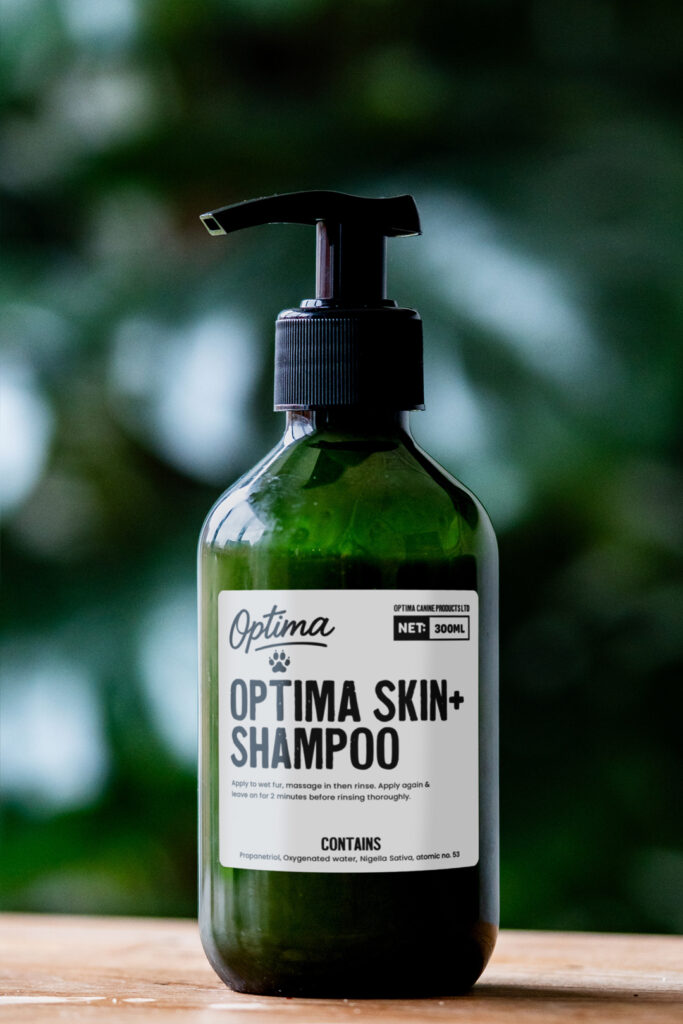
Their lineup, including the Puppy Shampoo and Skin+ Shampoo (ideal for irritation or allergy-prone skin), prioritizes straightforward, naturally derived components while eliminating the harsh elements outlined earlier.
For instance, the Puppy Shampoo incorporates naturally derived soap, glycerine, bicarbonate of soda, and coconut oil, scented gently with chamomile and vanilla. This combination cleanses mildly without over-stripping essential oils crucial for young skin, resulting in a soft coat and suitability for more frequent gentle bathing. It omits aggressive foaming agents, synthetic dyes, parabens, and formaldehyde releasers—focusing on essentials executed thoughtfully.
The adult dog shampoos, including the Skin+ variant, maintain a canine-appropriate pH balance, deliver effective yet non-drying cleansing, and incorporate soothing, supportive elements for skin and coat health. The Skin+ formula stands out for quickly alleviating inflammation and discomfort during flare-ups, without the rebound effects often seen with heavily medicated or chemical-laden alternatives. Users—including breeders, groomers, and everyday owners—frequently note softer, shinier coats, reduced scratching, and more content dogs post-bath.
Formulated explicitly for dogs (and puppies), these shampoos minimize risks from pH mismatch or ingested residues causing digestive upset. They rinse away cleanly with minimal buildup and come in practical sizes that avoid excessive reliance on questionable preservatives.
Practical Bathing Tips
- Limit baths for most adult dogs to every 4–8 weeks unless they get particularly dirty (e.g., working breeds or those with specific skin needs). Puppies may benefit from gentler, more regular bathing during housetraining phases.
- Perform a small patch test with any new product initially.
- For chronic skin concerns, combine appropriate shampoo use with a balanced diet and veterinary evaluation—topical care complements but does not replace holistic health management.
- For long-haired or double-coated breeds, consider a compatible light conditioner (if available from the brand) to deter mats without adding heaviness.
Final Thoughts
Many conventional dog shampoos provide short-term results but compromise long-term skin and coat well-being through sulfates, parabens, synthetic scents, petroleum barriers, and filler-dominated compositions. Recognizing these red flags makes it clear why so many dogs develop ongoing itchiness or dullness.
Optima Canine Products takes a refreshingly straightforward approach: effective, gentle, and genuinely tailored to dogs’ biology. Their Puppy Shampoo and Skin+ (along with other variants) deliver proper cleansing, promote shine and softness, and eliminate worries about harmful absorption or licking. If you’re ready to break the cycle of irritation or simply seek reliable peace of mind during grooming, switching to Optima Canine represents a meaningful, noticeable improvement.
Your dog will show appreciation through a happier mood and a healthier coat that lasts longer between baths.
Loved this story? Why not check out some of our other great content!