Flea Allergy Dermatitis in Dogs – No Need to Panic
If your dog is scratching like mad, chewing at their skin, or sporting bald patches, it might not be just a passing irritation.
Flea allergy dermatitis in dogs is one of the most common causes of miserable, non-stop itching – and it can happen even when you can’t spot a single flea on their coat.
Here’s the thing many owners miss: dogs can suffer badly from flea bites without having live fleas crawling around.
Fleas hop on, take a quick blood meal, inject saliva that triggers the allergy, and then hop off. A skin scrape at the vet might show nothing, but that doesn’t rule out fleas as the culprit.
Understanding Flea Allergy Dermatitis in Dogs: What Causes It and Why It Happens
Flea allergy dermatitis in dogs, or FAD for short, isn’t just about fleas biting. it’s an over-the-top allergic reaction to specific proteins in the flea’s saliva.
When a flea bites to suck blood, it pumps in a tiny bit of saliva containing antigens like histamine-like compounds, enzymes, and amino acids that the dog’s immune system sees as a major threat.
In sensitive dogs, this triggers a hypersensitivity response, often a Type I immediate reaction that causes rapid inflammation and itching, or sometimes a delayed Type IV response that builds up over hours or days.
But why do some dogs sail through flea bites unscathed while others suffer terribly?
It boils down to genetics and the immune system.
Certain breeds or individual dogs are predisposed to allergies, making them more likely to develop flea allergy dermatitis in dogs.
Dogs with other allergies, like to pollen, dust mites, or food, are especially vulnerable because their immune systems are already on high alert, reacting more fiercely to flea saliva.
It can hit at any age, even in older dogs who’ve never had issues before, and often worsens with repeated exposure as the body becomes more sensitised.
Exposure patterns play a big role too. Dogs that get bitten intermittently say, during walks in infested areas, tend to build up stronger allergic responses than those constantly exposed, who might develop some tolerance.
Environmental factors crank up the risk: warm, humid weather helps fleas thrive, and homes with carpets or soft furnishings give them hiding spots.
Cleanliness isn’t the issue here.
Any dog, no matter how pampered, can get flea allergy dermatitis in dogs if their genes and immune setup make them prone. Even indoor-only pups aren’t safe if a flea hitches a ride on your shoes or clothes.
Understanding this helps explain why one flea bite can cause weeks of torment: the reaction isn’t to the flea itself but the saliva left behind, sparking ongoing inflammation long after the flea has gone.
Flea allergy dermatitis in dogs usually targets spots like the base of the tail, lower back, inner thighs, and belly because that’s where fleas prefer to feed, in warm, protected areas with thinner skin.
If left unchecked, the constant itch leads to self-trauma, opening the door to secondary problems like bacterial or yeast infections.
It’s heartbreaking to see your loyal companion so distressed, but knowing the root cause empowers you to act fast and prevent recurrences.
Spotting flea allergy dermatitis in dogs early can save your pet from unnecessary suffering. Here are the key signs, with a bit more on why they crop up and tips to help you confirm and manage them:
- Intense, relentless itching This is the big red flag for flea allergy dermatitis in dogs—the itch is far worse than a standard flea nip because the immune overreaction floods the skin with inflammatory chemicals, making every nerve ending scream. Your dog might scratch, chew, or lick obsessively, especially at night when distractions are low, or right after being outside where fleas lurk. Useful to know: Watch for patterns—if it flares up seasonally in warmer months, that’s a clue to flea involvement. To differentiate from other itches like dry skin, try a flea comb; even if no fleas show, black specks (flea dirt) that turn red in water confirm recent activity. Early intervention stops the cycle before it escalates to wounds.
- Red, inflamed skin and scabs The allergy sparks immediate redness and swelling as histamines rush in, leading to small bumps or crusty scabs from scratching. Hot spots—those raw, oozing patches—form when moisture from licking traps bacteria, worsening the inflammation. Why here? The saliva proteins concentrate in bite areas, triggering localised immune attacks. Handy tip: Gently part the fur in suspect spots like the rump or thighs; if it’s pink and bumpy, note any smell indicating infection. Avoid home remedies like tea tree oil, which can irritate further—opt for vet-approved soothing sprays instead
- Hair loss in classic areas Alopecia hits the tail base, rear, belly, and inner thighs because constant trauma from biting pulls out fur, and chronic inflammation thickens skin (lichenification), making regrowth tough. This “flea triangle” pattern is a giveaway for flea allergy dermatitis in dogs, stemming from the immune system’s prolonged assault on hair follicles. Useful insight: If bald patches are symmetrical and itch-free elsewhere, it’s less likely ringworm (which is patchy and random). Track progress with photos; if other allergies coexist, hair loss might spread, so a vet allergy test could uncover multiple triggers.
- Secondary infections creeping in Scratching breaks the skin barrier, letting bacteria or yeast invade, causing pus, greasiness, or a yeasty odour— all amplified by the damp environment from saliva and tears in the skin. In flea allergy dermatitis in dogs, this happens because the initial itch weakens defences, turning a simple allergy into a full-blown infection. Pro tip: If your dog seems lethargic or the area feels hot, it’s time for antibiotics or antifungals from the vet. Prevent by keeping nails trimmed to reduce scratch damage, and use Elizabethan collars temporarily to break the itch-scratch cycle.
- No obvious fleas – but still suffering This sneaky sign fools many: fleas feed quickly and flee, but their saliva lingers, sustaining the reaction without visible pests. Why? Allergic dogs need just one bite to flare up, thanks to hypersensitive immunity honed by genetics or past exposures. Edge case: In multi-dog homes, one might suffer while others don’t, highlighting individual sensitivities. Test by starting strict flea control; if symptoms ease, that’s your answer. Remember, flea eggs in the home can reinfest, so treat the environment too.
If these signs ring true, flea allergy dermatitis in dogs is likely at play. A vet visit rules out mimics like food allergies or mange, but often, response to flea treatment confirms it.
The key to sorting flea allergy dermatitis in dogs

This starts with proper flea control. Treat your dog promptly to stop any more bites and give their skin a chance to heal.
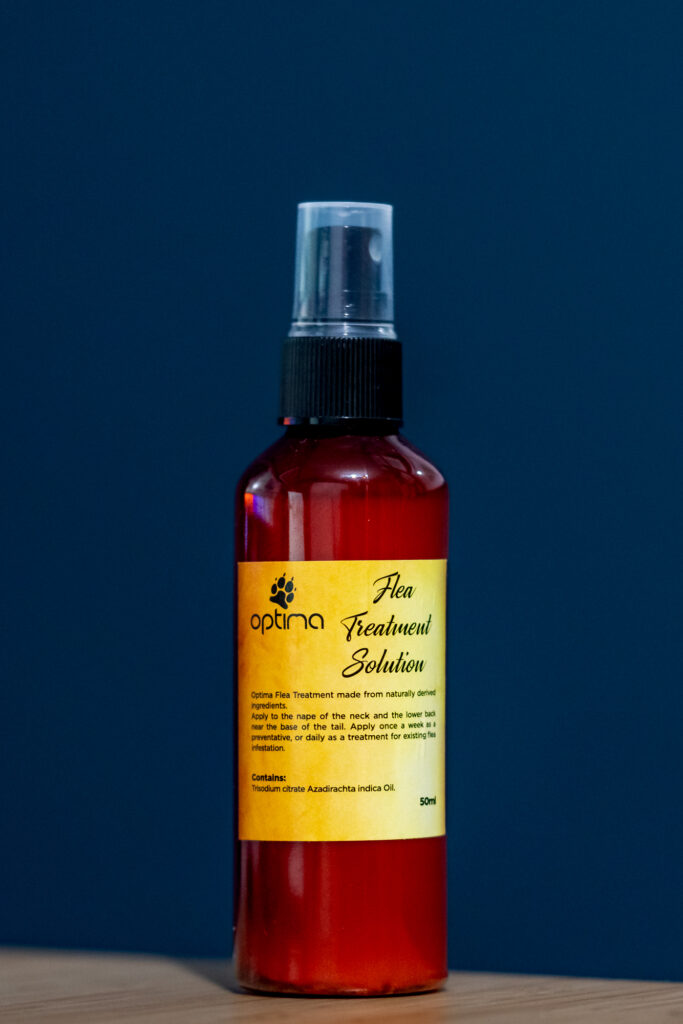
One straightforward approach is to use a spot-on treatment like Optima’s Flea Solution.
Apply it carefully all along the back, from the neck right down to the base of the tail.
Rub it in gently so it spreads across the skin, then leave it for 24 hours without bathing. This helps kill off any hidden fleas and prevents new ones from causing more trouble.
After that initial 24 hours, give your dog a soothing bath with Optima Skin Plus Shampoo.
This gentle formula cleans without stripping natural oils, calms irritated skin, and leaves your dog smelling fresh and feeling much more comfortable. Many owners find the itching eases noticeably after just one wash. For those stubborn bald patches caused by flea allergy dermatitis in dogs, keep up the care routine.
Bathe once a week with the Skin Plus Shampoo to maintain clean, healthy skin.

Then apply Optima Salve daily to the sore or bald areas.
This nourishing salve supports healing, strengthens the skin barrier, and encourages fur to grow back surprisingly quickly.

Before long, you’ll see healthier, more resilient skin and – best of all – a happier, less itchy dog bounding about like their old self.
Prevention is everything with flea allergy in dogs. Keep up monthly flea treatments year-round (even in winter, as central heating lets fleas thrive indoors).
Treat your home too – hoover regularly, wash bedding on a hot cycle, and consider a household spray if needed. If your dog has other allergies (like to pollen or food), they may be extra sensitive to fleas, so staying on top of protection makes a huge difference.
Flea allergy dermatitis in dogs can feel heartbreaking when your four-legged friend is so uncomfortable.
But with the right steps – spotting the signs early, breaking the flea cycle, and soothing the skin – most dogs bounce back beautifully.
Your loyal companion deserves to enjoy life without that constant torment, and a few simple changes can make all the difference.
You can find many more tips, tricks and general advice on the Optima NEWS PAGE